
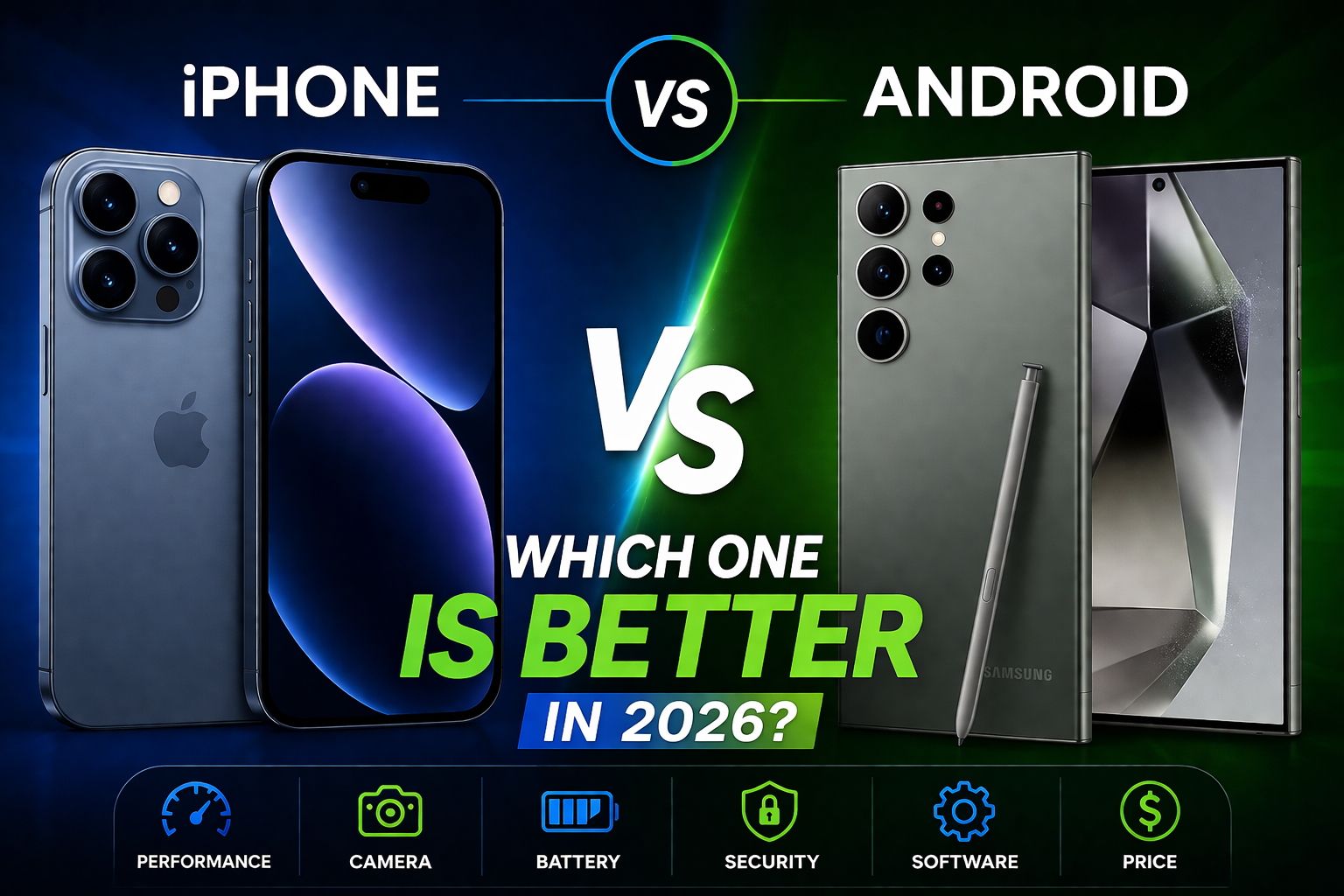
iPhone vs Android: Which One is Better in 2026 The debate between Apple Inc.’s iPhone and Android devices has been ongoing for years, and in 2026, it’s more competitive than ever. With rapid advancements in technology, both platforms now offer cutting-edge features, powerful performance, and unique user experiences. However, choosing between iPhone vs Android still depends on your personal needs, preferences, and budget. This is where professional services like Essay Writing Assignments become invaluable
In this detailed guide, we will compare iPhone vs Android in 2026 across design, performance, camera, battery life, software, security, and pricing to help you decide which one is better for you.
iPhone vs Android: Overview
What is an iPhone?
The iPhone is a premium smartphone developed exclusively by Apple Inc.. It runs on Apple’s iOS operating system, known for its smooth performance, strong security, and seamless ecosystem. For students who need reliable and professional support, Online Essay Writing remains a trusted choice.
What is Android?
Android is an open-source operating system developed by Google and used by multiple brands such as Samsung, Xiaomi, OnePlus, and more. It offers flexibility, customization, and a wide range of device options.
Design and Build Quality
iPhone Design in 2026
Apple continues to lead in premium design with sleek finishes, durable materials, and minimalistic aesthetics. iPhones in 2026 feature:
- Titanium or aluminum frames
- Ceramic shield protection
- Slim bezels and refined look
Android Design in 2026
Android phones offer more variety in design. Brands experiment with:
- Foldable and rollable displays
- Unique color options
- Different materials and form factors
Winner: Android (for variety), iPhone (for premium feel)
Performance and Speed
iPhone Performance
iPhones are powered by Apple’s latest A-series chips, which dominate in speed and efficiency. In 2026:
- Faster app loading
- Better gaming performance
- Smooth multitasking
Android Performance
Android devices use processors like Snapdragon and MediaTek. High-end Android phones now match iPhones in performance, but budget devices may lag.
Winner: iPhone (consistent performance)
Camera Comparison
iPhone Camera
iPhones are known for:
- Natural color tones
- Excellent video recording
- Consistent image quality
Android Camera
Android phones offer:
- Higher megapixels
- Zoom capabilities (up to 100x in some models)
- AI-enhanced photography
Winner: Tie (iPhone for video, Android for versatility)
Battery Life and Charging
iPhone Battery
Apple optimizes battery with iOS:
- Efficient power usage
- Good standby time
- Slower charging compared to Android
Android Battery
Android devices offer:
- Larger batteries
- Faster charging (up to 150W)
- Reverse wireless charging
Winner: Android
Security and Privacy
iPhone Security
Apple focuses heavily on user privacy:
- Strict app permissions
- Regular updates
- Strong encryption
Android Security
Android has improved but still varies by brand:
- Security depends on manufacturer
- More vulnerable to malware (in some cases)
Winner: iPhone
Software and User Experience
iOS Experience
- Clean and simple interface
- Smooth animations
- Limited customization
Android Experience
- Highly customizable
- Widgets, themes, launchers
- More control over apps
Winner: Android (customization), iPhone (simplicity)
Updates and Longevity
iPhone Updates
- 5–7 years of updates
- Same-day updates for all devices
Android Updates
- 3–5 years (varies by brand)
- Slower rollout
Winner: iPhone
Price and Value
iPhone Pricing
- Premium pricing
- Limited budget options
Android Pricing
- Wide price range (budget to flagship)
- Better value for money
Winner: Android
Ecosystem and Integration
Apple Ecosystem
iPhones work seamlessly with:
- MacBooks
- iPads
- Apple Watch
Android Ecosystem
Android integrates with:
- Google services
- Windows PCs
- Smart devices
Winner: iPhone (better ecosystem)
iPhone vs Android: Pros and Cons
iPhone Pros
- Smooth performance
- Strong security
- Long-term updates
- Premium build
iPhone Cons
- Expensive
- Limited customization
Android Pros
- Affordable options
- Customization
- Fast charging
- Variety of devices
Android Cons
- Inconsistent updates
- Security varies
Which One Should You Choose in 2026?
Choosing between iPhone vs Android in 2026 depends on your needs:
Choose iPhone if you want:
- A simple and smooth experience
- Long-term software support
- Strong privacy and security
Choose Android if you want:
- More customization
- Better value for money
- Innovative features
Future of iPhone vs Android
In 2026 and beyond:
- iPhones will continue focusing on privacy and ecosystem
- Android will push innovation and flexibility
Both platforms are improving rapidly, making it harder to pick a clear winner.
Final Verdict: iPhone vs Android in 2026
There is no one-size-fits-all answer to the question “iPhone vs Android: Which One is Better in 2026?”.
- If you prefer reliability, security, and long-term updates → iPhone is better
- If you want flexibility, affordability, and variety → Android is better
Ultimately, the best choice depends on your personal preferences, budget, and how you use your smartphone.
“…both platforms now offer cutting-edge features similar to the latest trends covered in our guide on Best Budget Smartphones 2026
“If you are looking for high-performance devices, check out our detailed guide on Top 10 Laptops for Students in 2026
“For audio and multimedia lovers, pairing your smartphone with the Best Wireless Earbuds in 2026
“If budget is your main concern, explore the latest deals in our article on Best Cheap Tech Gadgets Under $50
“You can also explore our comparison of trending gadgets in Top Technology Trends in 2026
Pingback: AI Tools for Blogging & SEO (2026 Guide)