


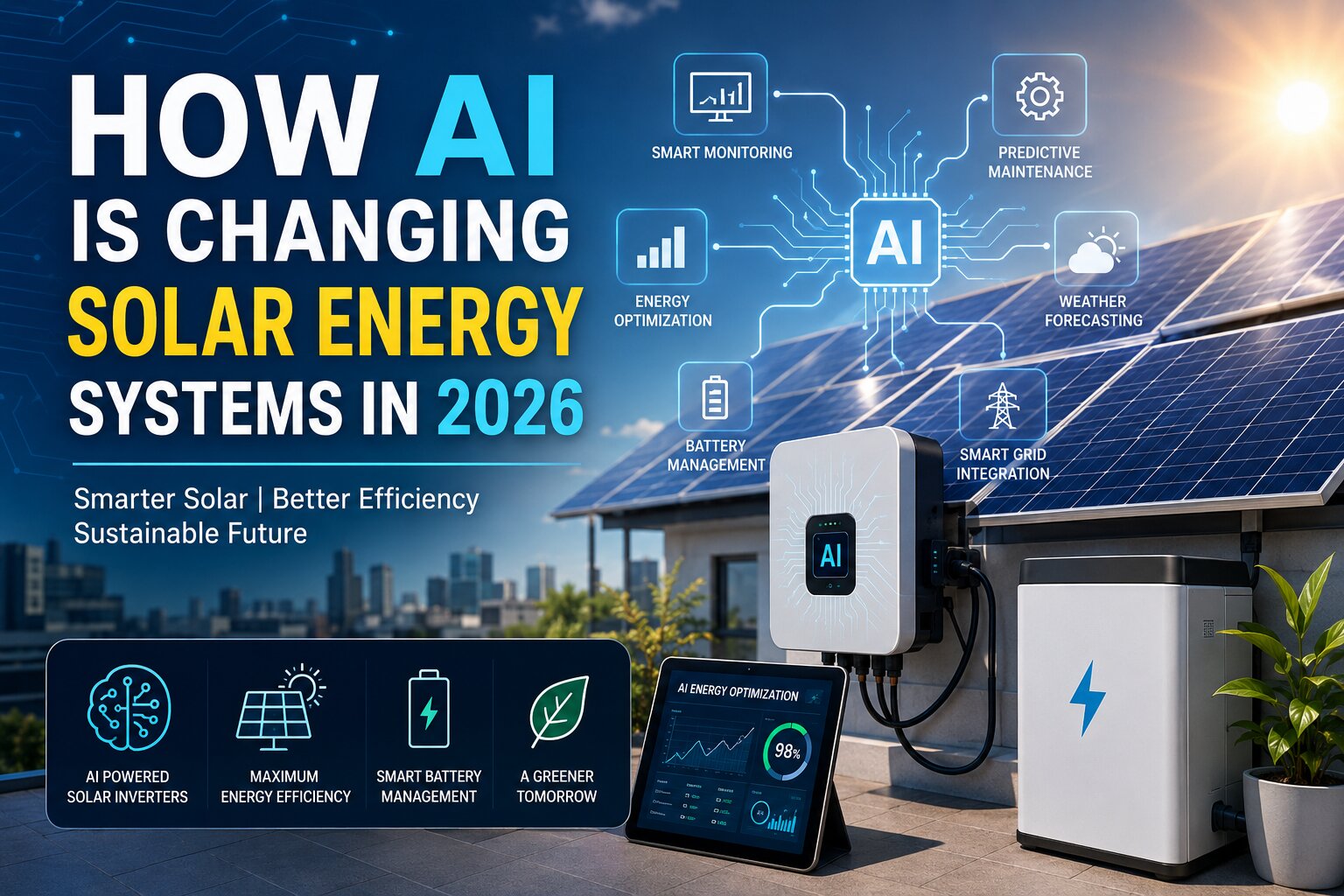
How AI Is Changing Solar Energy Systems in 2026. Artificial Intelligence is transforming nearly every industry in the modern world, and the solar energy sector is one of the biggest beneficiaries of this technological revolution. In 2026, AI-powered systems are making solar energy smarter, faster, more efficient, and more affordable for homeowners and businesses alike. From intelligent solar inverters to predictive maintenance systems and automated energy optimization tools, AI is reshaping how solar power is generated, stored, and consumed.
The demand for renewable energy has increased dramatically over the last few years because people want cleaner, more sustainable, and cost-effective energy solutions. Governments around the world are encouraging the adoption of solar energy through incentives, tax credits, and renewable energy policies. At the same time, advances in artificial intelligence are helping solar companies solve many challenges related to energy efficiency, weather forecasting, power management, and battery storage.
Traditional solar systems were effective, but they often lacked smart monitoring and intelligent automation capabilities. Homeowners had to manually monitor performance, identify faults, and manage energy usage. However, AI-based solar systems in 2026 are capable of learning user behavior, predicting energy demand, optimizing battery charging cycles, and automatically adjusting performance based on weather conditions. This has made solar energy systems significantly more reliable and efficient.
The rise of smart homes and Internet of Things (IoT) devices has also accelerated the adoption of AI-powered solar systems. Modern solar inverters can now communicate with home appliances, EV chargers, batteries, and smart grids to ensure maximum energy savings. People also search about best Energy Saving Appliances. Artificial intelligence can analyze massive amounts of data in real time and make instant decisions that improve energy efficiency while reducing electricity bills. People also search about best Energy Saving Appliances.
In this article, we will explore how AI is changing solar energy systems in 2026, including smart solar inverters, predictive maintenance, intelligent energy storage, automated monitoring systems, smart grids, and future innovations that are shaping the renewable energy industry.
The Evolution of Solar Energy Systems
Early Solar Technology
Solar energy systems have evolved significantly over the past few decades. Early solar systems mainly focused on converting sunlight into electricity through photovoltaic panels. While these systems were useful, they were relatively basic and lacked advanced monitoring capabilities. Homeowners often experienced problems such as inefficient energy production, battery issues, and difficulty managing energy consumption. This is where professional services like Essay Writing Assignments become invaluable
In the early days, solar systems depended heavily on manual maintenance and physical inspections. If a solar panel underperformed or an inverter failed, users might not notice until their electricity bills increased. These limitations created inefficiencies and reduced the overall reliability of solar systems.
Rise of Smart Solar Systems
As technology improved, solar manufacturers began integrating digital monitoring tools and internet connectivity into solar energy systems. Smart solar inverters and mobile monitoring applications allowed users to track power generation in real time. However, these systems still relied heavily on human decision-making.
The integration of artificial intelligence has completely changed the solar energy landscape in 2026. AI can now analyze historical energy data, weather patterns, electricity consumption habits, and system performance to make intelligent decisions automatically. This has transformed solar systems from passive energy generators into highly adaptive and self-optimizing energy solutions.
What Is AI in Solar Energy Systems?
Artificial intelligence in solar energy refers to the use of machine learning algorithms, predictive analytics, automation systems, and smart software to improve the efficiency and performance of solar power systems. AI enables solar systems to learn from data, identify patterns, and make intelligent decisions without constant human intervention.
AI-powered solar systems can monitor weather forecasts, detect equipment failures, optimize battery usage, and even predict future energy demand. These capabilities help users maximize energy production while minimizing waste and maintenance costs.
Modern AI solar systems combine several technologies, including:
- Machine Learning
- Big Data Analytics
- Internet of Things (IoT)
- Smart Sensors
- Cloud Computing
- Predictive Maintenance Tools
- Intelligent Energy Management Systems
These technologies work together to create smarter and more efficient renewable energy systems.
AI Powered Solar Inverters in 2026
What Are AI Solar Inverters?
AI-powered solar inverters are among the biggest innovations in the renewable energy industry. Traditional solar inverters simply converted DC electricity generated by solar panels into AC electricity for household use. However, AI-enabled inverters can do much more than simple power conversion.
Modern smart inverters can analyze power usage patterns, monitor system performance, communicate with batteries, and optimize energy flow throughout the day. They can even identify performance issues before they become serious problems.
Benefits of AI Solar Inverters
Improved Energy Efficiency
AI solar inverters use real-time data analysis to maximize energy efficiency. They can automatically adjust energy conversion rates based on sunlight intensity, weather conditions, and household energy demand.
Intelligent Load Management
Smart inverters can prioritize power distribution to important appliances during peak usage periods. This helps reduce electricity waste and improve overall energy management.
Better Battery Optimization
AI-enabled systems optimize battery charging and discharging cycles to extend battery lifespan and improve storage efficiency.
Remote Monitoring
Users can monitor their entire solar system through smartphone applications that provide real-time alerts, performance statistics, and maintenance recommendations.
Predictive Fault Detection
AI systems can detect unusual performance patterns and predict potential equipment failures before they happen.
Predictive Maintenance Using AI
Traditional Maintenance Challenges
One of the biggest challenges in traditional solar energy systems was identifying faults and maintenance issues. Many homeowners only discovered problems after their energy production dropped significantly.
Manual inspections were time-consuming, expensive, and inefficient. In large solar farms, identifying damaged panels or faulty components could take days or even weeks.
How AI Predictive Maintenance Works
AI predictive maintenance systems continuously monitor solar panels, inverters, batteries, and electrical connections. Using machine learning algorithms, AI can identify abnormal behavior and predict failures before they occur.
These systems analyze factors such as:
- Voltage fluctuations
- Temperature changes
- Panel efficiency
- Battery performance
- Weather conditions
- Power output patterns
When the AI system detects unusual activity, it immediately alerts users or maintenance teams.
Advantages of Predictive Maintenance
Reduced Downtime
AI systems can identify issues early, preventing complete system failures and reducing downtime.
Lower Repair Costs
Early detection of problems reduces expensive repairs and extends equipment lifespan.
Increased Energy Production
Efficient maintenance ensures solar panels operate at maximum efficiency.
Improved Safety
AI can detect overheating, electrical faults, and fire risks before they become dangerous.
AI and Smart Energy Management
Intelligent Energy Consumption
One of the most important ways AI is changing solar energy systems in 2026 is through intelligent energy management. AI systems can learn household energy usage patterns and optimize electricity consumption automatically.
For example, the AI system may decide to charge batteries during periods of high solar production and power appliances during peak electricity pricing hours.
Smart Home Integration
Modern AI solar systems integrate with smart home devices such as:
- Smart thermostats
- EV chargers
- Smart refrigerators
- Smart lighting systems
- Home automation hubs
This integration allows homeowners to automate energy usage and reduce electricity bills significantly.
Dynamic Energy Optimization
AI can shift energy usage to periods when solar production is highest. This reduces reliance on the electrical grid and maximizes solar savings.
For example, AI systems can automatically run washing machines, water heaters, or EV chargers when solar panels generate excess energy.
AI in Solar Battery Storage Systems
Importance of Battery Storage
Battery storage systems are essential for storing excess solar energy generated during the day for use at night or during power outages.
However, battery management can be complex because charging and discharging cycles affect battery lifespan and performance.
AI Battery Management Systems
AI-powered battery systems monitor and optimize battery health continuously. These systems analyze:
- Battery temperature
- Charge levels
- Usage patterns
- Weather forecasts
- Energy demand
AI can then determine the best times to charge or discharge the battery.
Benefits of AI Battery Systems
Longer Battery Lifespan
AI prevents overcharging and deep discharging, which extends battery life.
Better Energy Utilization
Smart battery management improves energy storage efficiency.
Backup Power Optimization
AI ensures sufficient backup power is available during emergencies or outages.
Reduced Energy Costs
AI minimizes electricity purchases from the grid during peak pricing periods.
AI and Solar Weather Forecasting
Weather Challenges in Solar Energy
Solar energy production depends heavily on weather conditions. Cloud cover, rain, storms, and seasonal changes can significantly impact energy generation.
Traditional solar systems struggled to adapt quickly to changing weather patterns.
AI Weather Prediction Systems
AI-powered forecasting systems use satellite data, weather sensors, and machine learning algorithms to predict solar production accurately.
These systems can forecast:
- Sunlight intensity
- Cloud movement
- Rainfall probability
- Temperature changes
- Energy production levels
Benefits of AI Forecasting
Improved Grid Stability
Utility companies can balance electricity supply and demand more effectively.
Better Energy Planning
Homeowners can optimize battery usage based on expected solar production.
Increased Efficiency
AI systems adjust energy management strategies automatically based on weather predictions.
AI in Large Solar Farms
Challenges in Utility Scale Solar Farms
Large solar farms contain thousands of solar panels spread across huge areas. Managing these facilities manually is extremely difficult.
Common challenges include:
- Fault detection
- Performance optimization
- Energy forecasting
- Maintenance scheduling
- Grid integration
AI Solutions for Solar Farms
AI systems use drones, smart sensors, and data analytics to monitor large solar farms efficiently.
Drone Inspections
AI-powered drones can scan solar panels for dirt, cracks, overheating, or damage.
Performance Analytics
Machine learning algorithms identify underperforming panels and optimize energy output.
Automated Maintenance Scheduling
AI systems automatically schedule maintenance based on equipment condition and performance trends.
AI and Smart Grids
What Are Smart Grids?
Smart grids are modern electricity networks that use digital communication technology to manage electricity flow more efficiently.
AI plays a critical role in smart grid management.
How AI Improves Smart Grids
AI systems analyze electricity demand, renewable energy production, and grid conditions in real time.
This helps utility providers:
- Prevent power outages
- Balance electricity supply
- Reduce energy waste
- Improve grid reliability
AI and Renewable Energy Integration
Renewable energy sources like solar and wind are variable by nature. AI helps stabilize energy distribution by predicting power generation and adjusting grid operations accordingly.
AI and Electric Vehicle Charging
Growing EV Demand
Electric vehicles are becoming increasingly popular in 2026, creating higher electricity demand.
Many homeowners now combine solar systems with EV charging stations.
AI Powered EV Charging
AI systems optimize EV charging schedules based on:
- Solar production
- Electricity pricing
- Battery storage levels
- Driving habits
This reduces charging costs and improves energy efficiency.
AI Security and Cyber Protection
Risks of Smart Solar Systems
As solar systems become more connected to the internet, cybersecurity risks also increase.
Hackers may target smart grids, solar inverters, or connected devices.
AI Cybersecurity Solutions
AI-based security systems monitor network activity and identify suspicious behavior instantly.
These systems help protect:
- Solar monitoring platforms
- Smart inverters
- Battery systems
- Home automation networks
Challenges of AI in Solar Energy
High Initial Costs
AI-powered solar systems are more expensive than traditional systems due to advanced hardware and software requirements.
Data Privacy Concerns
Smart energy systems collect large amounts of user data, raising privacy concerns.
Technical Complexity
AI systems require specialized knowledge for installation and maintenance.
Dependence on Internet Connectivity
Some AI features depend heavily on cloud connectivity and internet access.
Future of AI in Solar Energy Systems
Autonomous Solar Systems
Future AI systems may become fully autonomous, requiring minimal human involvement.
Self-Healing Solar Networks
AI could automatically isolate faulty components and reroute electricity during failures.
Advanced Energy Trading
AI may enable homeowners to sell excess solar energy automatically through smart energy marketplaces.
Hyper Efficient Solar Panels
AI-driven manufacturing and optimization may lead to ultra-efficient solar panels with significantly higher energy conversion rates.
Why AI Solar Systems Are Becoming Popular in 2026
The popularity of AI solar systems is increasing because consumers want smarter, more efficient, and cost-effective energy solutions. Rising electricity prices and growing environmental concerns are encouraging more homeowners to invest in renewable energy technologies.
AI-powered systems offer several benefits:
- Lower electricity bills
- Better energy efficiency
- Improved reliability
- Reduced maintenance costs
- Enhanced battery performance
- Smart home compatibility
These advantages make AI solar systems highly attractive for modern households and businesses.
Tips Before Buying an AI Solar System
Research the Brand
Choose reputable solar brands with strong customer reviews and reliable warranties.
Check Smart Features
Look for systems with AI monitoring, predictive maintenance, and smart energy management.
Battery Compatibility
Ensure the inverter supports modern lithium battery systems.
Mobile App Support
Select systems with user-friendly monitoring applications.
Installation Support
Hire certified solar installers with experience in AI-based systems.
Conclusion
Artificial intelligence is revolutionizing the solar energy industry in 2026 by making renewable energy systems smarter, more efficient, and more reliable than ever before. AI-powered solar inverters, predictive maintenance systems, intelligent battery management, smart grids, and automated energy optimization tools are transforming how homes and businesses use solar power.
The integration of AI into solar energy systems is helping users reduce electricity bills, improve energy efficiency, extend equipment lifespan, and maximize renewable energy usage. Smart solar systems can now predict weather conditions, manage battery storage intelligently, optimize power distribution, and detect maintenance issues before they become serious problems.
As renewable energy adoption continues to grow worldwide, AI technology will play an even bigger role in shaping the future of sustainable energy. Future advancements may include fully autonomous solar systems, self-healing smart grids, advanced energy trading platforms, and highly efficient solar panels powered by machine learning algorithms.
For homeowners, businesses, and governments, AI-driven solar technology represents a major step toward a cleaner, smarter, and more sustainable energy future. Investing in AI-powered solar systems in 2026 is not only an environmentally responsible choice but also a smart financial decision for long-term energy savings and independence.
